
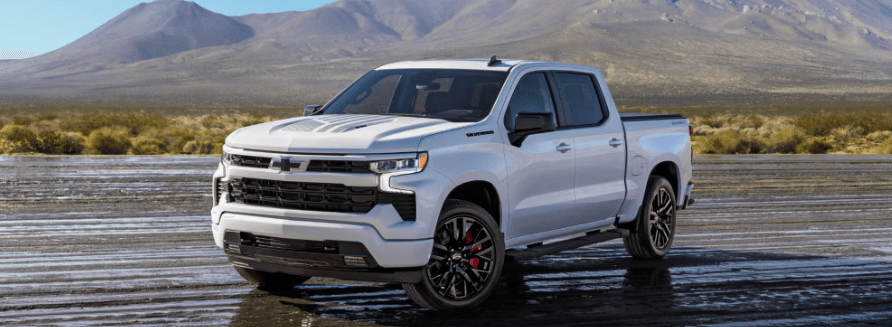
This content was aggregated from local dealer data and insights provided by the USA Today Network Automotive Insights team using Google Gemini and the Vehicles For Sale Near Cincinnati marketplace writing team.
Shopping for a new Chevrolet Silverado 1500 near Cincinnati involves more than finding a pickup with enough horsepower to pull a trailer. The 2026 Chevrolet Silverado 1500 is a full-size truck designed to handle a variety of work, recreational, and everyday driving needs, but its towing capability depends on the exact configuration. Engine choice, cab style, bed length, drivetrain, axle ratio, trailering equipment, and payload all affect how much a particular truck can safely handle. Before choosing a Silverado, Cincinnati-area buyers should understand the difference between advertised maximum towing figures and the ratings that apply to the specific truck they plan to purchase.
Towing capacity is one of the most important specifications for full-size pickup shoppers.
However, it is also one of the easiest figures to misunderstand.
A manufacturer may advertise a maximum towing capability for a model family, but that figure generally applies only to specific configurations under defined conditions.
It does not mean every Silverado 1500 can tow the same amount.
A truck with a different engine, cab, bed, drivetrain, axle ratio, or equipment package may have a substantially different rating.
For buyers considering the 2026 Chevrolet Silverado 1500, the most important step is identifying the actual trailer and load requirements before comparing trucks.
The first question is not how much the Silverado can tow.
It is how much the trailer will weigh when ready for travel.
A trailer's empty or dry weight does not include everything that may be added during use.
For example, a camper may carry water, food, luggage, camping equipment, and other supplies.
A utility trailer may carry lawn equipment, tools, building materials, or recreational vehicles.
These items can significantly increase the trailer's actual weight.
Buyers should estimate the fully loaded trailer weight and compare it with the tow rating of the exact Silverado configuration.
A truck that can technically tow an empty trailer may not have sufficient capacity once the trailer is loaded.
Towing capacity and payload are related, but they are not interchangeable.
Towing capacity refers to the maximum trailer weight a properly equipped vehicle is rated to pull under specified conditions.
Payload refers to the weight the truck can carry, including passengers, cargo, accessories, and the downward load imposed by the trailer on the hitch.
That last factor is particularly important.
A trailer can be within the truck's towing limit while still causing the truck to exceed its payload rating.
For example, a family towing a camper may also carry passengers, luggage, a cooler, and tools in the truck.
The combined weight of those items, plus trailer tongue weight, must fit within the truck's available payload capacity.
This is why buyers should compare both ratings.
Trailer tongue weight is the downward force applied to the tow vehicle through the hitch.
For many conventional bumper-pull trailers, a common planning range is approximately 10% to 15% of the loaded trailer weight, although the appropriate amount depends on trailer design and manufacturer guidance.
Consider a hypothetical trailer weighing 6,000 pounds when loaded.
At 12% tongue weight, it would place approximately 720 pounds on the hitch.
That 720 pounds contributes to the load carried by the truck.
If the Silverado also carries four occupants, luggage, and equipment, the remaining payload capacity can decrease quickly.
The truck must have enough capacity for all these loads.
Before towing, buyers should understand several terms.
Rating | What It Means | Why It Matters |
GVWR | Gross Vehicle Weight Rating | Maximum allowable loaded weight of the truck |
GAWR | Gross Axle Weight Rating | Maximum allowable weight on each axle |
GCWR | Gross Combined Weight Rating | Maximum allowable combined weight of truck and trailer |
Payload | Weight available for occupants, cargo, and other loads | Determines how much the truck can carry |
Trailer weight rating | Maximum trailer weight under specified conditions | Helps determine trailer compatibility |
Tongue weight | Downward load applied by the trailer to the hitch | Counts against truck loading limits |
Hitch rating | Capacity of the installed hitch and related equipment | May limit the towing setup |
A safe towing combination must comply with all applicable ratings, not just the advertised trailer-weight maximum.
Buyers should avoid planning around the absolute maximum rating without considering how the truck will be used.
Passengers, tools, aftermarket accessories, and cargo can reduce available payload.
A trailer may also gain weight after the owner adds equipment.
For Cincinnati drivers who regularly tow campers or work trailers, choosing a truck with an appropriate margin below its applicable limits can provide greater flexibility.
However, that margin does not replace the need to comply with all manufacturer ratings.
The 2026 Silverado 1500 may be offered with different powertrains and equipment combinations.
Those differences can influence acceleration, towing performance, fuel use, maintenance requirements, and purchase cost.
Because exact 2026 specifications were not independently confirmed in the available research results, buyers should verify the final powertrain lineup and ratings using Chevrolet's official trailering documentation.
Recent Silverado 1500 lineups have included several gasoline and diesel engine options.
Different engines emphasize different combinations of torque, fuel efficiency, and performance.
For towing, torque delivery and transmission behavior can be especially important.
A truck may have sufficient rated capacity but feel different when accelerating with a trailer, climbing grades, or merging onto a highway.
Cincinnati-area buyers should consider their most demanding towing scenario.
Someone pulling a small utility trailer occasionally may not need the same powertrain as a driver who regularly tows a large camper.
The best engine is the one that meets the actual workload while providing acceptable operating costs.
Transmission calibration affects how a pickup responds under load.
Depending on configuration, available towing-oriented functions may adjust shift behavior or other vehicle systems to support trailering.
These features can improve drivability when towing.
However, buyers should verify which functions are included on the exact vehicle.
A towing-oriented drive mode does not increase the truck's published weight ratings.
It is a tool for operating within those limits.
Drivetrain choice can influence traction, vehicle weight, and towing ratings.
Rear-wheel-drive configurations may appeal to drivers who spend most of their time on paved roads and prioritize efficiency or payload.
Four-wheel drive can provide additional traction in suitable low-grip conditions.
However, 4WD components add weight and may affect available payload and towing capacity.
For Cincinnati drivers, the choice may depend on whether the truck will be used on construction sites, rural property, boat ramps, or snowy roads.
Four-wheel drive does not eliminate the need for suitable tires or careful driving.
Depending on configuration and equipment, Silverado models may offer towing-related technologies designed to support hitching, maneuvering, and monitoring.
Potential features to investigate include:
Trailer camera views
Hitch guidance
Trailer brake controller
Trailer-sway-related stability functions
Trailer profiles and monitoring features
Towing-related driver information
Available blind-zone or camera assistance
These systems may make certain tasks easier, but availability varies.
Buyers should confirm which features are included and whether additional equipment is required.
Technology also has limitations.
Cameras and sensors do not replace checking mirrors, monitoring trailer position, or using a spotter when appropriate.
A trailer brake controller can be an important part of a towing setup.
It helps coordinate braking between the tow vehicle and a trailer equipped with compatible electric brakes.
However, buyers should verify whether a controller is factory-installed, available as an option, or requires separate installation.
They should also confirm compatibility with the intended trailer.
Trailer brake requirements may depend on trailer weight and applicable laws.
A controller does not compensate for exceeding the truck's ratings.
Towing can place additional demands on the engine, transmission, and cooling systems.
Some configurations may include towing-oriented cooling or other equipment.
Buyers should review the exact trailering package rather than assuming every Silverado includes the same hardware.
A truck with an advertised hitch receiver may not have all the equipment needed for a particular trailer.
The manufacturer's trailering guide and individual vehicle documentation should be the final references.
Cab style, bed length, and installed equipment can significantly affect a Silverado's capability.
These choices influence vehicle weight, passenger space, cargo flexibility, maneuverability, and available payload.
A larger cab provides more passenger room.
However, additional cab structure and equipment may increase vehicle weight.
That can affect the amount of weight available for passengers, cargo, and trailer tongue load.
For buyers who frequently transport coworkers or family members, a larger cab may be necessary.
For someone who primarily uses the truck for towing with one or two occupants, a different configuration may offer advantages.
The correct choice depends on how the truck will be used.
Bed length affects what can be carried and how easy the truck is to maneuver.
A longer bed may be useful for lumber, equipment, or other bulky materials.
A shorter bed may be easier to manage in parking lots and residential areas.
However, bed length also changes the truck's overall dimensions and may affect available configurations and ratings.
Cincinnati buyers should consider where the truck will be parked and whether it needs to fit in a garage.
A truck that is ideal for carrying equipment may be inconvenient in a narrow driveway or parking structure.
Configuration Consideration | Potential Advantage | What Buyers Should Verify |
Smaller cab | May reduce vehicle weight | Seating needs and actual payload |
Larger cab | More passenger room | Payload and overall dimensions |
Shorter bed | Easier maneuverability | Cargo-length requirements |
Longer bed | More cargo-floor length | Garage fit and parking practicality |
Rear-wheel drive | May reduce drivetrain weight | Traction needs and tow rating |
Four-wheel drive | Added traction capability | Weight, payload, and equipment |
Trailering package | May add towing-related equipment | Exact components and ratings |
The table describes general trade-offs, not guaranteed ratings for specific 2026 configurations.
Axle ratio can influence how a truck delivers torque to the wheels.
Different axle ratios may affect towing performance, engine speed, fuel consumption, and rated capacity.
However, the relationship depends on the complete powertrain and vehicle configuration.
Buyers should not select a truck based on axle ratio alone.
Instead, they should verify the axle ratio and confirm the corresponding towing rating in Chevrolet's official documentation.
Consider a hypothetical Silverado with an available payload capacity of 1,700 pounds.
Suppose the truck carries:
Load | Illustrative Weight |
Driver and passengers | 500 lb |
Tools and luggage | 200 lb |
Trailer tongue weight | 750 lb |
Additional cargo | 100 lb |
Total load | 1,550 lb |
Remaining payload | 150 lb |
This example is hypothetical and does not represent a verified 2026 Silverado payload rating.
It illustrates how quickly available capacity can be used.
If the truck also has aftermarket accessories, a bed cover, or additional equipment, those items may further reduce the available margin.
Buyers should use the actual vehicle's payload label and applicable ratings when calculating loads.
The truck's certification and tire-loading labels provide important information about the specific vehicle.
These labels can help buyers identify applicable weight limits.
However, the exact trailer rating may require additional manufacturer documentation based on the vehicle's configuration.
Buyers should review:
Vehicle identification number
GVWR
Front and rear GAWR
Tire and loading information
Installed trailering equipment
Official towing guide for the configuration
Hitch and trailer component ratings
A salesperson's general description of the Silverado's maximum towing capability should not replace these checks.
A weight-distributing hitch may be appropriate for certain conventional trailers.
Its purpose is to help distribute loads through the towing combination when properly selected and adjusted.
However, not every hitch or trailer setup is compatible with weight distribution.
Buyers should follow Chevrolet's guidance and the hitch and trailer manufacturers' instructions.
A weight-distributing hitch does not increase the truck's GVWR, GAWR, GCWR, or other published limits.
Cincinnati-area drivers may use their Silverado to tow trailers along major highways.
Highway towing requires more planning than ordinary commuting.
A loaded trailer affects acceleration, braking distance, lane changes, and overall vehicle stability.
Drivers should allow additional following distance and avoid sudden maneuvers.
Trailer tire condition, inflation pressure, load distribution, and secure connections should be checked before departure.
Buyers should also consider how frequently they will tow.
A truck that is comfortable without a trailer may feel different when pulling a substantial load.
The Cincinnati region includes hills and changing elevations.
Climbing grades with a trailer can place additional demands on the powertrain.
Descending grades requires careful speed control and appropriate braking technique.
Buyers should understand how the Silverado's transmission and towing-related features operate.
They should also consider trailer brakes and the trailer's fully loaded weight.
A properly matched towing setup can help make these trips more manageable.
A full-size pickup provides useful capability but requires more space than a compact SUV or sedan.
For drivers who regularly travel into downtown Cincinnati, parking garages and narrow spaces may be challenging.
Cab and bed configuration can affect turning space and overall length.
Buyers should test parking and maneuverability before selecting a configuration.
Camera systems and parking assistance may help, but they do not change the truck's physical dimensions.
A Silverado may serve several purposes.
During the week, it might transport tools or materials.
On weekends, it may tow a boat, camper, or recreational trailer.
However, a truck that is suitable for one trailer may not be suitable for another.
Buyers should calculate the requirements of the heaviest trailer they expect to use.
If they anticipate purchasing a larger trailer later, that possibility should be considered before choosing the truck.
Towing generally increases fuel consumption.
The actual change depends on trailer weight, aerodynamic drag, speed, terrain, weather, and driving habits.
A tall travel trailer may create substantial aerodynamic resistance even if it is not exceptionally heavy.
Buyers should not assume that published fuel-economy estimates will reflect towing conditions.
For drivers who tow frequently, fuel expenses may become a significant part of ownership cost.
Towing can increase wear on certain components.
Buyers should review Chevrolet's maintenance recommendations for vehicles used in demanding conditions.
Important areas may include:
Engine oil and filters
Transmission service
Cooling-system maintenance
Brake inspections
Tire condition and inflation
Suspension components
Hitch and trailer connections
The truck's tires must also meet the required load specifications.
Replacing tires with unsuitable sizes or load ratings can affect safe operation.
The Silverado's purchase price is only one part of its cost.
Cincinnati buyers should also research:
Insurance
Fuel
Maintenance
Tires
Registration and taxes
Financing
Depreciation
Trailer equipment and accessories
A lower monthly payment does not necessarily mean a lower total cost.
Longer financing terms may increase the total interest paid.
Buyers should compare the complete out-the-door price and financing agreement before committing.
Compare the exact truck's towing capacity, payload, engine, drivetrain, axle ratio, cab style, bed length, and trailering equipment. Buyers should also check GVWR, GAWR, and GCWR. For Cincinnati drivers, highway comfort, parking dimensions, and ownership costs matter. Always verify ratings for the specific vehicle rather than relying on advertised maximum figures.
Research fuel consumption, insurance, tire replacement, routine maintenance, financing, and depreciation. Frequent towing may increase fuel use and component wear. Buyers should also budget for trailer brakes, hitch equipment, and other necessary accessories. Review Chevrolet's maintenance schedule and compare the full out-the-door price rather than focusing only on the monthly payment.
Start with marketplace listings that show individual vehicle configurations, equipment, and seller information. Compare trucks with similar engines, cab styles, drivetrains, and trailering packages. Confirm current availability and ask sellers for vehicle-specific towing and payload information. Buyers should also request an itemized quote before visiting or making a purchase decision.
No. Towing ratings depend on the exact configuration, including engine, transmission, drivetrain, axle ratio, cab, bed, and installed equipment. A maximum towing figure advertised for the model family may apply only to certain versions. Buyers should consult Chevrolet's official trailering guide and the individual truck's documentation before towing.
Both matter. Towing capacity limits the trailer weight under specified conditions, while payload limits the weight carried by the truck, including passengers, cargo, and trailer tongue weight. A camper may fall within the trailer rating but still overload the truck's payload or axle limits. Buyers must verify every applicable rating.
The 2026 Chevrolet Silverado 1500 offers the versatility expected from a full-size pickup, but choosing the right truck requires careful attention to configuration-specific capability.
For Cincinnati buyers, the most important considerations are the trailer's loaded weight, the truck's available payload, the applicable towing rating, and the equipment required for safe operation.
Cab style, bed length, drivetrain, axle ratio, and trailering packages can all influence the final result.
A truck with an impressive advertised maximum towing figure may not be the best match for every trailer.
Likewise, a lower-rated configuration may provide all the capability a buyer needs while offering advantages in purchase cost, maneuverability, or everyday usability.
The best Silverado 1500 for towing is the one whose verified ratings comfortably match the trailer, passengers, cargo, and driving conditions—not simply the truck with the largest advertised towing number.
By checking the exact vehicle's specifications and planning for real-world loads, Cincinnati shoppers can make a more informed purchase.
If you're comparing Silverado configurations, reviewing individual listings can help you identify differences in powertrains, cab styles, bed lengths, and available trailering equipment.
Browse New 2026 Chevy Silverado 1500 for Sale Near Cincinnati, OH to compare marketplace listings and review individual truck details.
You can also learn more about Columbia Chevrolet to review dealership information and explore your shopping options.
Before visiting, confirm the truck's availability, exact equipment, vehicle-specific towing ratings, and current out-the-door price with the seller.
Written for https://vehiclesforsalenearcincinnati.com
By the USA TODAY Network Automotive Insights Team, in collaboration with Columbia Chevrolet and the Vehicles For Sale Near Cincinnati Enquirer Edition.
Disclaimer: This article's content is intended for informational purposes only. Vehicle specifications and features are based on data provided by J.D. Power and local dealerships and may vary by individual vehicle, VIN, trim, configuration, packages, and optional equipment. Vehicle images may not depict the exact model, trim, features, packages, accessories, or specifications described. Vehicle pricing, availability, features, and specifications are subject to change without notice. Please reference the dealership's vehicle listing and window sticker or consult the dealership directly for complete and accurate details.